A Conversation With Torne Valley

Ongoing exhibition — Syntropia Art Space Gallery, Smedjegatan 5, Gothenburg

In Torne valley, time flows like the river—slow, persistent, and ever-present. Life is shaped through the meeting of nature, labor, and tradition. Craft carries traces of the hands that came before us—objects that serve not only a function, but also hold memories, relationships, and stories.

During the upbringing of Nike’s mother and her sister, their mothers Tornedalian identity was almost invisible. It lived quietly, in small gestures: when she counted in Meänkieli, when she took her daughters’ temperature and when she spoke with her siblings. An identity not erased, but turned inward—shaped by a culture of shame that emerged in the wake of the assimilation policies of the late 19th century.

This project is about coming to know one’s roots.
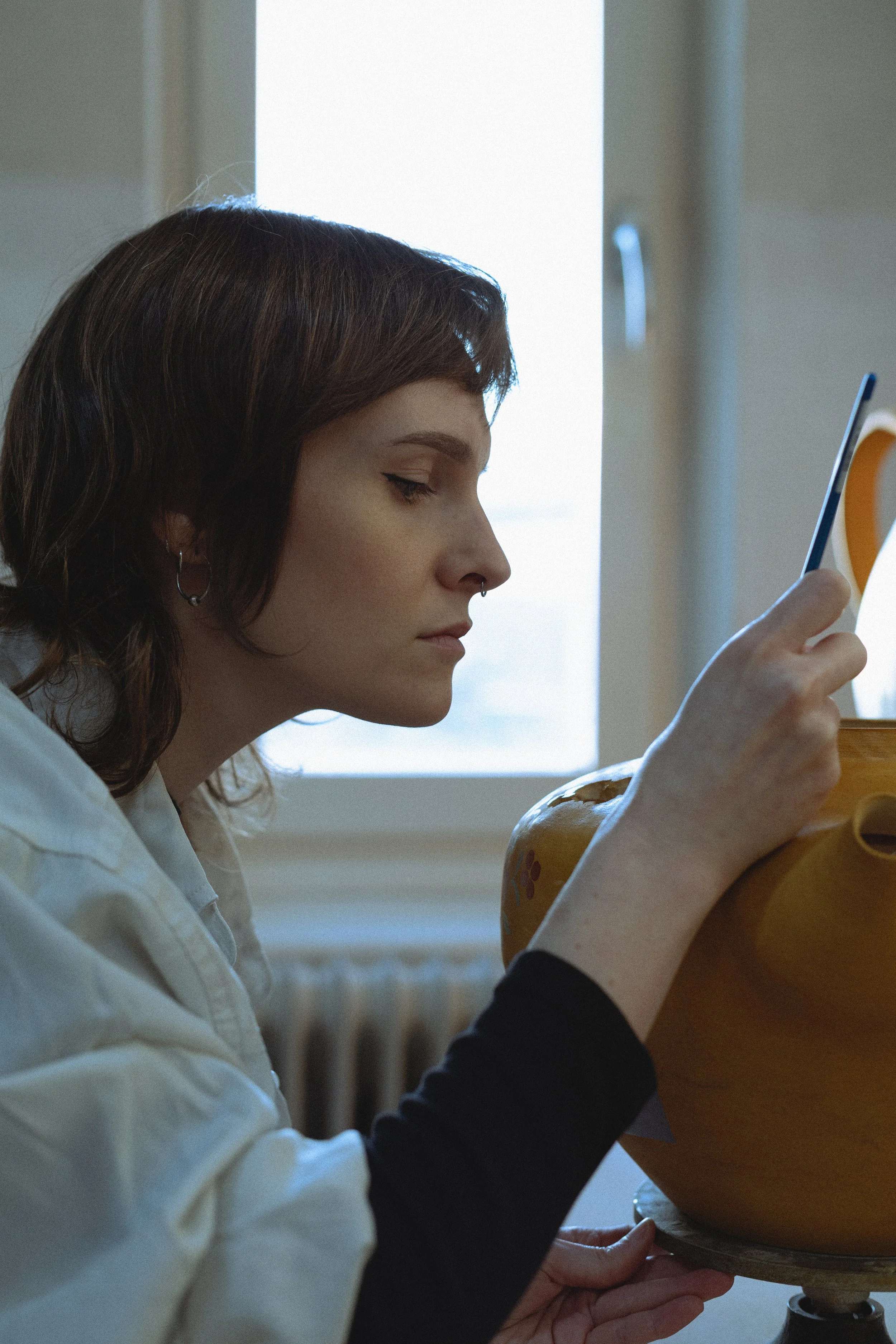
Through travels in Torne valley, Nike has gathered impressions that form the foundation of the artistic expression presented in this exhibition. Stories from women in the family are intertwined with impressions of nature, materials, and craft.

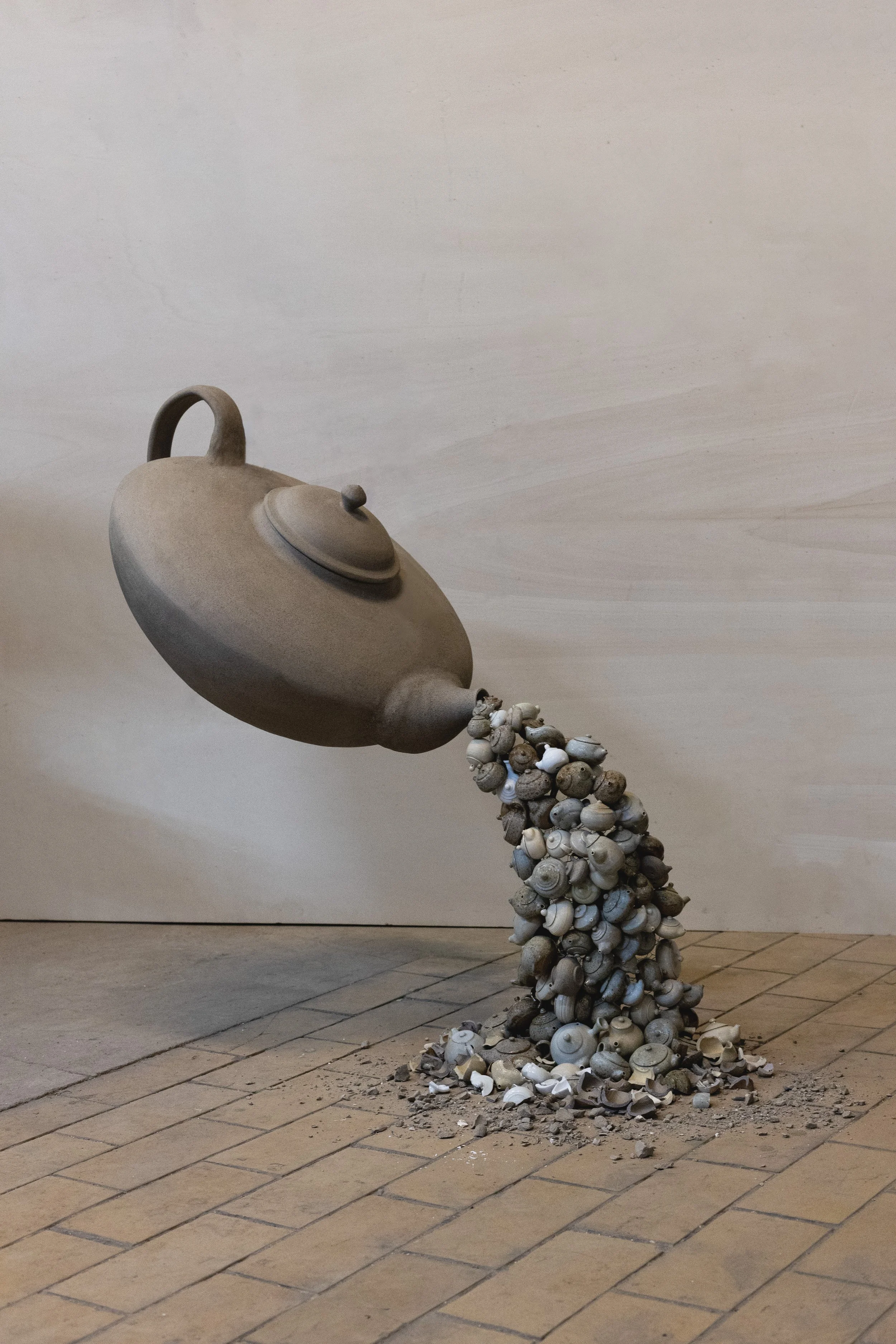
At the center of the exhibition stands the teapot. Elevated from a utilitarian object to a sculptural form, it invites the viewer to see it as a bearer of cultural and artistic meaning. It emerges as a symbol of tradition, encounters, reflection, and inner strength, but also of hospitality—a quality long central to Tornedalian culture. Through Nike’s sculptures, a heritage becomes visible that is both personal and collective, where roots and belonging take shape through material and form.

Like other vessel forms, such as the vase, the teapot becomes a symbol of feminine strength. It carries traces of the resilience often associated with the Tornedalian woman—where endurance and care coexist. At the same time, some teapots appear broken or ruin-like, evoking the transience of life and the fragility inherent in the transmission of traditional knowledge across generations.

Through craft, time becomes visible. Materials age, surfaces change, and the traces left behind hold stories. What was once new gradually becomes something else—heritage, memory, testimony. Here, change and continuity meet. The teapot becomes a link between past and present, filled, emptied, and filled again—just like life itself.